Fritextsökning
Artiklar per år
Innehållstyper
-
“You discover one thing – and then 10 new questions arise”
COVID-19, diabetes, heart disease, and the impact of dog ownership on humans are just some of multitasker Tove Fall’s areas of research. However, her current focus is on her next field: the role of gut flora in human health.
-

The first drugs to slow down Alzheimer’s – but what does it mean for patients?
New treatments for early Alzheimer’s are bringing hope to thousands of patients and their families. The question is, who will get the treatment, how will the right patients be found in time, and will the healthcare system’s resources be sufficient? Life Science Sweden has spoken to Swedish researchers in Alzheimer’s who voice cautious hope but also see further challenges.
-
Astra Zeneca’s Sweden CEO: “We have great faith in our portfolio”
It all started with a summer job as an operator at Astra’s chemical factory in Snäckviken, just outside Södertälje. More than three decades and countless different assignments later, Per Alfredsson, born and raised in Södertälje, is CEO of Astra Zeneca Sweden, which employs 7800 people in Södertälje, Stockholm and Gothenburg. “It was a very special feeling to be in charge of the entire organisation,” he says in an interview about his career and potential future blockbusters.
-
Marie Gårdmark: ”Patienten i fokus borde vara en självklarhet”
”Som industri gör vi klokt i att lyssna till patienter och förstå deras vardag”, skriver Marie Gårdmark om en positiv utveckling inom läkemedelsutveckling där vi kan vänta oss att Europa tar efter USA.
-

Neanderthal gene variants may cause Viking disease
A new study suggests that the so-called Viking disease, which affects the hand function in many older people, may be linked to gene variants inherited from Neanderthals.
-
Anna Törner: The minute between life and death
“I have never told anyone about this day that happened more than 20 years ago. But I sometimes reflect on what happened, on what might have happened. When I try to understand why I haven’t told anyone, I find the answer: a feeling of shame. There is no forgiveness for something like this, even though it is very human to be distracted for a moment,” Anna Törner writes in a column.
-

Nanoparticles to help detect pulmonary disease
Nanoparticles behave in a certain way in the air. Using this knowledge, researchers at Lund University have developed a new measurement method for lung examinations based on the phenomenon.
-

A surprising discovery about the immune system in cases of cancer
Professor Göran Jönsson is trying to understand why some patients benefit from immunotherapies while others don’t. A couple of years ago, he made a surprising discovery about the function of the immune system.
-

ALS – When the body has given up, but the brain persists
The nerve disease ALS gradually deprives the patient of control over the muscles and, eventually, also of speech. The eyes continue to function, though, and with the help of, among other things, a Swedish-developed invention, communication
-
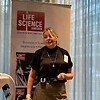
Swedish breakthrough in Alzheimer’s: “We can finally present great data”
Treatments for Alzheimer’s disease are currently among the hottest topics in drug development. Two Swedish research companies with high ambitions and successes in the field participated in Bioscience 2022 conference at Life City in Hagastaden, Stockholm.
-

“We need to build flexible operating theatres”
Flexible operating theatres, micro-sensors on surgeons to monitor their well-being and 3D images projected onto organs to be operated on. These are a few ideas that three specialist surgeons are suggesting for the operating theatre of the future.
-
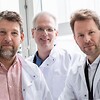
“We aim to be a start-up company with an academic spirit”
Chronic pain and Alzheimer’s are two diseases that plague many people worldwide and seem impossible to cure. However, Huddinge-based company Alzecure is working on developing drugs for both conditions.
-
Biosimilars bring price pressure, but are they sufficiently used?
When biosimilars were introduced just over 16 years ago, hopes were raised that they would give many more patients access to effective but otherwise extremely expensive treatments with biological drugs. So, how well has Swedish healthcare used biosimilars? The answer partly depends on whom you ask.
-

Swedish-Danish meeting at Medicon Village: “One of the most important life science congresses”
For the eleventh year, The Future of Swedish and Danish Life Science was held on Wednesday, and the event continues to function as a connecting link between the life science sectors of both countries. This year’s event attracted nearly 450 visitors.
-
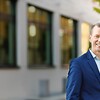
Björn Arvidsson: “We need robust and recognized ecosystems for continued competitiveness”
“We have idea carriers and excellent innovation opportunities, and now we must invest in creating ecosystems that provide them with even better growth opportunities,” Björn Arvidsson writes in a column.
-

Sweden and Denmark – this is how they choose their strategies
Scandinavia’s two major powers in pharmaceutical research have developed strategies for growth in life science, and both countries aim to become world leaders.
-
Giulia Gaudenzi: ”Key lessons from global health research”
The world will still face major challenges in the post Covid-19 pandemic, writes Giulia Gaudenzi at the KTH Division of Nanobiotechnology at Scilifelab, in a column.
-

Helena Strigård: The rise of the community
Sweden Bio´s CEO is looking back at the last decade of development in the industry. Something has shifted in the interdependence between small and larger companies.
-
Meet the governmental life science office
More clinical trials, promotion for digitisation and interoperability together with increased use of data generated by both healthcare and individuals. The duties of the Life Sciences office are plentiful.
-
Fondmedel till forskning
Insamlingsstiftelsen Cancer-och Allergifonden ger medel till 23 forskningsprojekt.
-
They’re all doing it – buying drug research
December 12 the time has come for this year's annual partnering meeting Pharma Outsourcing in Stockholm. In Sweden this is a growing business, with Recipharm as the biggest CRMO of the country.
-
640 miljoner till forskningsprojekt
Knut och Alice Wallenbergs Stiftelse har beviljat totalt 640 miljoner kronor till 22 forskningsprojekt varav flera inom medicin som bedöms ha möjlighet att leda till framtida vetenskapliga genombrott.
-
Pengaregn över forskare
Långvariga infektioner, smärta och mitokondriernas genuttryck är några av de ämnen som delar på pengarna när Knut och Alice Wallenbergs Stiftelse delar ut 752 miljoner kronor till 22 svenska forskningsprojekt.
-
Neurovive inleder fas II-studie
Första patienten rekryterad till studien Ciprics, på akut njurskada vid hjärtkirurgi.
 BREAKING