Fritextsökning
Artiklar per år
Innehållstyper
-

“We develop vaccines no one else is developing”
Vaccines delivered via patches rather than injections. Future solutions could fundamentally reshape global health. Meet the man leading efforts to distribute vaccines where the need is greatest.
-

Swedish industrial group Alfa Laval establishes pharmaceutical division
Alfa Laval is creating a new division focused on tailored solutions for the pharmaceutical industry.
-

GSK eyes blockbuster potential – plans five new trials
GSK sees blockbuster potential in its experimental drug candidate Mo-rez. Early trial results suggest the treatment may shrink tumours in patients with advanced and hard-to-treat gynaecological cancers.
-
Disappointment for Diamyd in Phase III – the share price plunges
Diamyd Medical’s share was sharply down on Monday following negative Phase III results. “This outcome is highly unexpected,” said the company’s CEO, Ulf Hannelius.
-

Sprint Bioscience builds the molecules that will become new medicines
In Sprint Bioscience’s laboratory in Flemingsberg, Huddinge, molecules are being created that no one has ever built before. The company specializes in preclinical drug development and has, in several cases, succeeded in securing deals and partnerships with larger pharmaceutical companies.
-

Thermo Fisher Expands in Sweden – “We Are Sending a Clear Message”
The American life science giant Thermo Fisher Scientific has inaugurated a new distribution center in Uppsala. “By investing in increasing our capacity as well as our R&D here in Uppsala, we are building resilience for decades, not quarters,” says Santhosh Nair of Thermo Fisher.
-

National cord blood bank resumes collection
The collection of umbilical cord blood is now resuming during planned caesarean sections at Östra Hospital in Gothenburg. The blood remaining in the placenta and umbilical cord after birth contains stem cells that can be used to treat conditions including leukaemia and severe immunodeficiency disorders.
-

New treatment recommended for children with brain tumours
The European Medicines Agency has recommended conditional approval of a new targeted treatment for children with the brain tumour pediatric low-grade glioma.
-

International medical graduates leave Sweden in high numbers
Three years after completing their studies, 46 percent of international doctoral students who graduated in the medical field had left the country. This is shown in Statistics Sweden’s (SCB) analysis of researchers who graduated between 2017 and 2020.
-

More than 150 jobs cut as Merck scales back vaccin production
Merck & Co, known as MSD in Europe, is hitting the brakes following a sharp decline in demand for its HPV vaccine Gardasil. Production at its facility in Durham, North Carolina, is now being halted, with more than 150 employees facing redundancy.
-
Anna Törner: ”Drug prices – an important driver of innovation”
We live under the illusion that no price is too high when it comes to health, but that simply isn’t true, writes Anna Törner.
-

Multicancer test failed to meet its goal – shares plunged
A blood test designed to detect multiple types of cancer failed to meet its primary endpoint in a large UK study. The company behind the test saw its market value cut in half.
-

Painkiller cuts recurrence risk by more than 50% – national guidelines updated
Sweden’s national guidelines for colon and rectal cancer have been updated — just nine months after the previous revision. The move follows new Swedish research showing that a daily dose of acetylsalicylic acid — the active ingredient in aspirin — can halve the risk of recurrence in a common subgroup of bowel cancer.
-

Novo Nordisk strengthens board after turbulent year
Changes to Novo Nordisk’s board continue. Following last year’s sweeping restructuring, the Danish obesity drugmaker is now nominating two new directors with extensive experience in the pharmaceutical industry.
-

A healthy society requires more than a new pill
Sarah Lidé on how medicines are essential – but a sustainable approach to healthy societies also depends on prevention and behavioural change
-
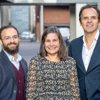
Asgard teaches tumours to self‑destruct – moving closer to clinical trials
Swedish biotech Asgard Therapeutics not only has an evocative name, but also a remarkably exciting approach to cancer treatment: getting tumour cells to reprogram themselves so that they become visible to the body’s immune system.
-

FDA leaders seek to scrap two-study requirement
A single pivotal study may be sufficient to secure approval for a new medicine in the United States. That is the message delivered by FDA Commissioner Marty Makary and the agency’s medical and scientific chief, Vinay Prasad, in an article in the New England Journal of Medicine.
-

“BioArctic is Leqembi, but also much more”
What once began as a small Swedish biotech company has grown into a fully fledged pharmaceutical company with global reach. At the helm is Gunilla Osswald, who joined early on and is now leading BioArctic into its next era.
-

Genovis ramps up in ADC technology: “An area where we’re seeing very strong interest”
With new products and an expanded licensing agreement in hand Genovis now has a partly new focus for its operations: ADCs – or antibody‑drug conjugates.
-

Finland leads the way in the hunt for international top researchers
Several Nordic initiatives are currently under way to recruit international top researchers. Finland is making its largest national investment ever in attracting leading talent from abroad.
-

Dying man saved by artificial lung system
An external artificial lung system kept a critically ill man alive for two days until he could undergo a lung transplant. In the longer term, researchers hope the technology could transform the treatment of patients with life-threatening lung disease.
-

Study: Autism as common in girls as in boys
Autism may be just as common in girls as in boys, but girls are diagnosed significantly later and less often during childhood, according to a large Swedish registry study.
-

Cell-free cartilage from Lund could pave the way for new bone transplants
Researchers at Lund University have developed a new method for repairing large bone defects, based on laboratory-engineered, cell-free cartilage grafts. The technique has so far been tested in animal models, and the results have attracted considerable interest internationally.
-

Gene therapies on clinical hold after tumour found in five‑year‑old
The development of a brain tumour in a study participant has led the FDA to temporarily halt two ongoing gene therapy programs. The affected company, Regenxbio, immediately lost nearly one‑fifth of its market value.
 BREAKING