Fritextsökning
Artiklar per år
Innehållstyper
-

Column: ”Cheating with pea flowers and does it matter whether you are right?”
Is it possible to forgive shortcuts or outright cheating in science - if it turns out that the researcher was ultimately right? Anna Törner discuss this topic in a column.
-

Hög höjd motverkar metabola syndromet
Diabetes, kranskärlssjukdom, högt kolesterol och fetma förekommer i lägre grad hos de två miljoner människor som bor och lever på höjder över 4 500 meter.
-

Här påbörjas utvecklingen av en ny innovations-hub i Uppsala
Nu påbörjas utvecklingen av ett nytt life science-kluster i Uppsala. Fastighetsbolaget Vectura planerar i år att starta bygget av en byggnad som är tänkt att bli en mötesplats för forskning och näringsliv.
-

Karolinska sjätte bästa sjukhus i världen enligt ny rankning
Den amerikanska tidskriften Newsweek rankar varje år världens bästa sjukhus. 2023 finns Karolinska universitetssjukhuset på sjätte plats.
-
”Ärtfusk och spelar det någon roll om man har rätt?”
Går det att förlåta genvägar eller rent av fusk inom vetenskap – om det visar sig att forskaren i slutändan hade rätt? Om det resonerar Anna Törner i en krönika.
-

The Swedish National Board of Health and Welfare rejects prioritising andrology as a speciality
Male infertility can be linked to a shorter lifespan and several severe diseases, but when couples who want children are examined, the focus is on the woman. Experts in the field claim that andrology needs to become a speciality in Sweden to increase awareness and knowledge. But the Swedish National Board of Health and Welfare says that it is not a priority.
-

“An entire industry is about to be wiped out”
According to Jennie Ekbeck, CEO of Umeå Biotech Incubators, Sweden risks not having any small diagnostic companies left in five years.
-

How critical are the “Spermageddon” reports? – Researchers call for action
A much talked about meta-study indicates that sperm concentration in men’s seminal fluid has halved in 40 years. Experts in andrology that Life Science Sweden speaks to believe that the results must be taken seriously, and call for action from the Swedish authorities.
-

Column: ”Life as a F1 race”
"The F1 car makes several pit stops during a race and during a lifetime the human being may also have to come in several times for maintenance", Björn Ursing writes in a column.
-
Editorial: ”AI that both impresses and frightens”
”In the past, I've rarely been particularly impressed by something that was produced by AI. But this is something completely different”, Samuel Lagercrantz writes in an editorial.
-

Läkemedelsbolag fälls för infobrev om nytt vaccin
Att ett nytt vaccin blivit godkänt och tillgängligt är inte tillräckligt betydelsefullt för att få rubriceras "viktig information" i ett meddelande till professionen. Det slår Informationsgranskningsnämnden, IGN, fast i ett beslut.
-

Hello Jenni Nordborg!
Life Science Sweden would like to know more about Jenni Nordborg and asks her about her new job, why she became a chemical engineer and who her role model is.
-

A surprising discovery about the immune system in cases of cancer
Professor Göran Jönsson is trying to understand why some patients benefit from immunotherapies while others don’t. A couple of years ago, he made a surprising discovery about the function of the immune system.
-

Rapid development in blood analysis – “Sweden is leading the race”
Thousands of analytical tests using just one single drop of blood. What was revealed as a hoax just a few years ago is now a reality, according to KTH professor and serial entrepreneur Mathias Uhlén.
-

Column: ”Authentic leadership and clear mandates pave the way for more female CEOs”
”I believe that the aspect of having clear mandates and titles on the one hand and women progressing into top positions must be explored further”, Helena Strigård writes in a column.
-

Individual DNA passport could result in fewer drug side effects
You may be required to show a DNA passport when you pick up medicines at the pharmacy in the future. According to a new study, patients might suffer 30% fewer side effects if the drug treatment is adapted to their genes.
-

Claims of life science companies fleeing abroad is a myth according to survey
The claim that life science companies are moving abroad is exaggerated. In fact, only a tiny percentage is leaving the country, according to a survey.
-
Precision medicine centre: “Extensive activity on several fronts”
Two years ago, the Karolinska Institutet and the Karolinska University Hospital announced that they would jointly launch the Precision Medicine Centre. Medtech Magazine called Anna Wedell, who is heading the work, to find out…
-

Column: ”We need to exploit the benefits of the regulations“
You don’t need to search long on the Internet to find lists of the most innovative countries with Sweden ranking at the top. Sweden generally offers good conditions for growing new solutions, but it is also becoming increasingly clear that we
-
FDA-ansökan inlämnad för Orexos akutläkemedel mot överdos
Uppsalabolaget Orexo har lämnat in en ansökan om godkännande för sitt överdosläkemedel till den amerikanska läkemedelsmyndigheten FDA. Bolaget hoppas kunna lansera produkten i opioidkrisens USA under första halvåret 2024.
-

The government proposes fines for pharmaceutical companies that fail to notify drug shortages in time
According to a compilation from the Swedish Medicines Agency, the number of residually notified medicines increased by 54 % in Sweden last year compared to the previous year. In a bill presented by the government a number of proposals are put forward to counteract the problem.
-

Läkemedel mot MLD rekommenderas av NT-rådet
Orchard Therapeutics läkemedel Libmeldy, mot metakromatisk leukodystrofi, rekommenderas nu av rådet för nya terapier i Sverige.
-
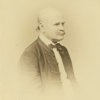
He saved lives with his theories – was ostracised and ended up in a mental hospital
Hungarian doctor Ignaz Semmelweis (1818-1865) undoubtedly possessed plenty of persistence, diligence and sound reasoning skills – but he was hardly blessed with luck and timing.
-

"Unclear proposal from the EU Commission on how to solve the MDR challenges"
Even before the EU regulation on medical devices (MDR) came into force, medical technology companies and doctors were concerned that it would endanger the availability of medical devices in the EU. Unfortunately, the fears have come true.
 BREAKING